
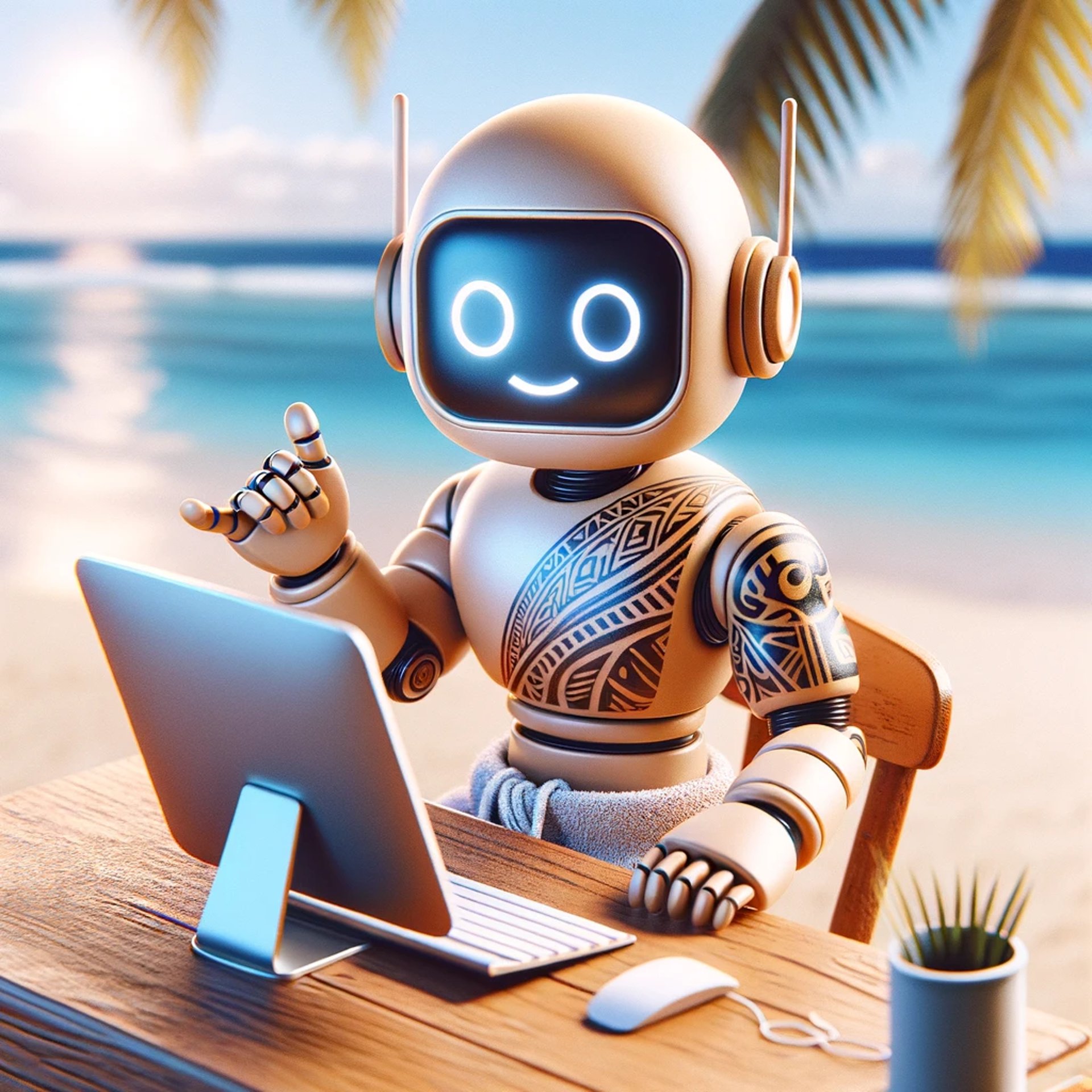
Benefits of AI in Economics Classes
Artificial Intelligence can be good for students in Economics in Samoa as they learn about technology in globalisation
Aloimaina Shirley Hunt
4/6/20242 min read
My post content
The Necessity of Integrating AI for Good in Samoa's Economics Education
In the rapidly evolving digital age, Artificial Intelligence (AI) has emerged as a transformative force across various sectors, from healthcare and agriculture to finance and education. Particularly in the context of Samoa, a nation with robust aspirations for technological advancement and economic growth, integrating AI into education, especially economics education, presents an unprecedented opportunity. This integration is not just a pathway towards modernization but a necessary evolution to equip the Samoan workforce with the skills needed for the future.
Economics, as a discipline, is pivotal in understanding and navigating the complexities of national and global markets. For Samoa, with its unique economic challenges and opportunities, the relevance of economics education cannot be overstated. It's here that AI for Good, an initiative aimed at leveraging AI technologies to address societal challenges, becomes crucial. By integrating AI into economics education, Samoa can take significant strides in achieving educational excellence and economic empowerment.
Firstly, AI-powered tools and platforms can revolutionize how economics is taught and learned in Samoa. Traditional teaching methods, while valuable, may not suffice in capturing the dynamic nature of global economics. AI can introduce interactive and adaptive learning environments that cater to the individual learning pace and style of each student, making economics education more accessible and engaging. For instance, AI can simulate economic models, providing students with hands-on experience in understanding market dynamics, economic forecasting, and policy impact analysis without the steep learning curves typically associated with these concepts.
Moreover, the incorporation of AI in education can help in bridging the digital divide. Samoa, like many Pacific nations, faces challenges in educational resource allocation and access. AI-driven educational platforms can offer remote learning opportunities, breaking geographical barriers and enabling students from various parts of the country to access quality economics education. This democratization of education is key to building a well-informed and economically literate populace, capable of contributing to Samoa's economic development.
Furthermore, AI for Good in economics education aligns with Samoa's broader goals of sustainable development and digital transformation. By fostering an AI-literate workforce, Samoa can attract high-tech industries, encourage local innovation, and enhance its competitiveness in the global market. The knowledge and skills acquired through an AI-enhanced economics education will empower Samoan students to not only participate in but also drive the digital economy, promoting entrepreneurship and creating new job opportunities.
However, the successful integration of AI into Samoa's economics education requires strategic planning and investment. It involves updating curricula, training educators in AI and digital tools, and ensuring equitable access to technology. Additionally, it's vital to address ethical considerations, ensuring AI is used responsibly and inclusively, respecting cultural values and norms.
In conclusion, the integration of AI for Good into Samoa's economics education is not merely an option but a necessity in the face of global digital transformation. It offers a pathway to enhance educational outcomes, foster economic empowerment, and position Samoa as a leader in digital innovation in the Pacific region. As Samoa embarks on this journey, the focus should be on creating a sustainable, inclusive, and ethically guided framework that leverages AI's potential to benefit all Samoans.
Connect
info
Follow facebook.com/serve2succeed
Join Our Community
685.771.1984